

Dubai unveils Glydways self-driving transit system at World Governments Summit 2026
RTA highlights future mobility solutions alongside international policy discussions
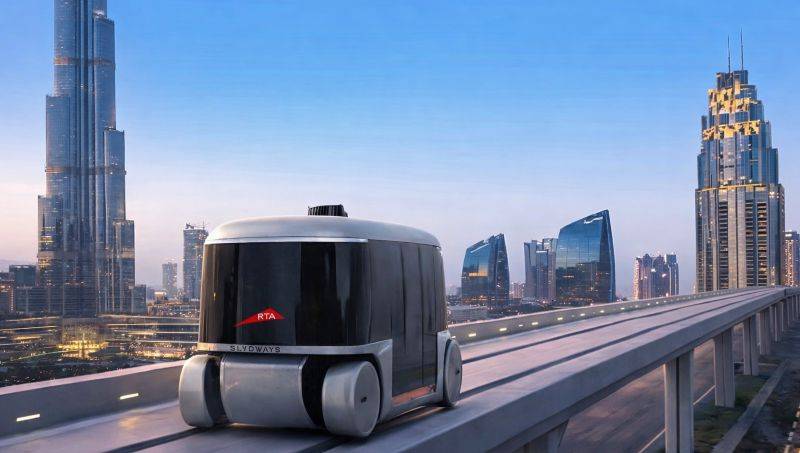
DUBAI – Dubai’s Roads and Transport Authority has unveiled the Glydways system at the World Governments Summit 2026, positioning it as a major step in the emirate’s long-term urban mobility strategy.
The system features a network of small, self-driving electric vehicles operating on narrow, dedicated guideways designed to avoid interference with existing road traffic. Introduced as part of the summit’s opening day showcases, Glydways is presented as a scalable, high-capacity solution aligned with Dubai’s smart transport ambitions.
The World Governments Summit 2026 opened in Dubai under the theme Shaping Future Governments, recording the highest level of international participation since its launch. The event brings together heads of state, ministers, global experts and decision-makers to examine governance models amid rapid global change, with technology and sustainability at the core of discussions.
Glydways system
The Glydways system operates on compact, elevated or ground-level tracks, allowing autonomous vehicles to travel independently of conventional road congestion. According to the RTA, the system is capable of transporting more than 10,000 passengers per hour in each direction, making it suitable for dense urban corridors and high-demand areas. Vehicles are fully electric, supporting Dubai’s environmental targets and wider sustainability commitments.
The system’s narrow footprint allows deployment in areas where traditional rail or road expansion would be impractical, while its automated operation is intended to optimise travel times and operational efficiency. RTA officials highlighted the system’s flexibility, noting its potential integration with existing public transport networks.
World Governments Summit
Convening more than 6,250 decision-makers and thinkers, the World Governments Summit 2026 has attracted the largest leadership participation in its history. The event is attended by over 45 heads of state and government, more than 15 deputy heads of state, over 500 ministers, and representatives from more than 150 governments.
The summit’s programme includes more than 445 sessions and over 450 global speakers, alongside participation from more than 700 CEOs of major corporations. Also attending are 87 laureates of prestigious international scientific awards, including Nobel Prize recipients, and representatives from over 80 international and regional organisations.
Future vision
The 2026 edition features 25 global forums and more than 45 ministerial and high-level meetings, addressing governance, economic resilience, climate action and technological transformation. The summit will issue 36 strategic reports in collaboration with international knowledge partners and launch the third edition of the Global Ministers Survey.
Media presence is also at a record high, with more than 840 international, regional and local journalists and 44 media partners covering the event, reflecting the summit’s growing global influence.